Adult BMI Categories Explained: What Does Your BMI Mean?
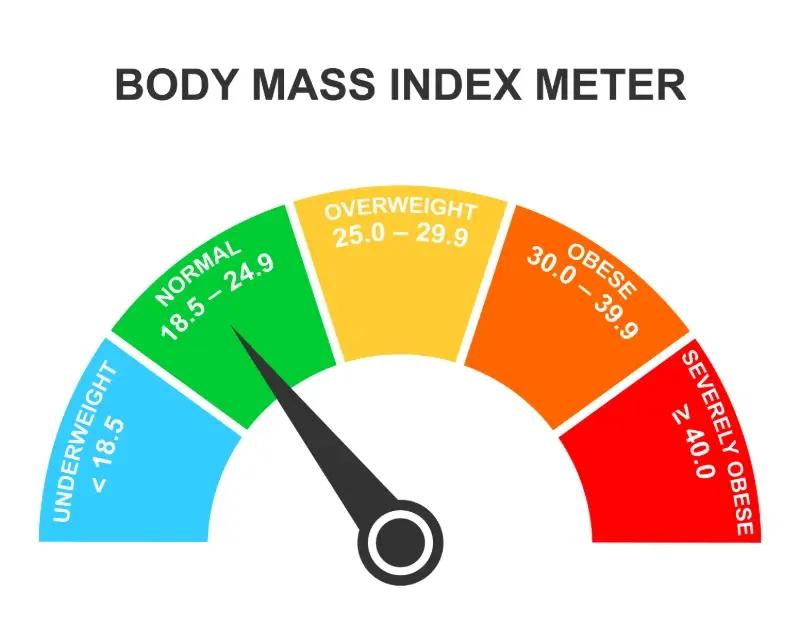
Your Body Mass Index (BMI) is a number calculated from your height and weight. For adults age 20 and older, that number falls into one of several BMI categories: underweight, healthy weight, overweight, Class 1 obesity, Class 2 obesity, or Class 3 obesity.
BMI is a screening measure, not a diagnosis. Your BMI can provide a useful starting point for understanding your weight relative to your height, but it should be considered alongside your medical history, physical health, laboratory results, body composition, and other factors.
Not sure what your BMI is? Use our Adult BMI Calculator to calculate your BMI using your height and weight.
What Are the BMI Categories for Adults?
For adults age 20 and older, BMI categories are based on the following ranges:
These categories are used for adults regardless of age, sex, or race. BMI for children and teens ages 2 through 19 is interpreted differently using age- and sex-specific growth charts.
What Does an Underweight BMI Mean?
An adult BMI below 18.5 falls within the underweight category.
A BMI below the healthy weight range means your weight is relatively low compared with your height. However, BMI alone cannot explain why someone has a lower body weight or determine whether that weight is healthy for that individual.
A healthcare provider may consider factors such as nutrition, medical history, recent weight changes, medications, laboratory results, and other health concerns when evaluating a low BMI.
If your BMI is below 18.5, particularly if you have experienced unexplained weight loss or other changes in your health, discuss the result with your healthcare provider.
What Is a Healthy BMI Range?
For most adults age 20 and older, a BMI from 18.5 to 24.9 falls within the healthy weight category.
A BMI within this range indicates that a person's weight falls within the standard healthy BMI range relative to their height. However, being within the healthy weight category does not automatically mean someone has no health risks.
BMI does not measure blood pressure, cholesterol, blood sugar, physical fitness, body composition, or where body fat is located. For this reason, healthcare providers consider BMI together with other health information rather than using it alone.
What Does an Overweight BMI Mean?
An adult BMI from 25.0 to 29.9 falls within the overweight category.
The term describes a BMI range and is not, by itself, a medical diagnosis. A person whose BMI falls within this range may or may not have excess body fat or weight-related health concerns.
For example, BMI does not distinguish between fat, muscle, and bone. Someone with greater muscle mass may have a higher BMI even when they do not have a high level of body fat.
If your BMI falls between 25.0 and 29.9, your healthcare provider can help put the number into context based on your overall health.
What Does Class 1 Obesity Mean?
Class 1 obesity is defined as an adult BMI from 30.0 to 34.9.
A BMI of 30 or higher falls within the obesity category. The CDC divides obesity into three classes to further describe the BMI range. Class 1 is the first of these three categories.
A BMI within the obesity range can be associated with a greater likelihood of certain health conditions, but BMI alone cannot determine whether an individual has those conditions.
Healthcare providers may evaluate additional factors such as blood pressure, cholesterol, blood sugar, sleep, mobility, medical history, and other health measurements when assessing potential weight-related risks.
What Does Class 2 Obesity Mean?
Class 2 obesity is defined as an adult BMI from 35.0 to 39.9.
At this level, BMI may become particularly relevant when discussing treatment options for obesity, including metabolic and bariatric surgery.
Current ASMBS/IFSO guidelines recommend metabolic and bariatric surgery for individuals with a BMI of 35 or higher regardless of the presence, absence, or severity of obesity-related health conditions. However, BMI is only part of a bariatric surgery evaluation.
Medical history, previous weight-loss treatment, health conditions, surgical risk, personal goals, and insurance requirements can all affect whether surgery is appropriate for an individual.
What Does Class 3 Obesity Mean?
Class 3 obesity is defined as an adult BMI of 40.0 or higher and is also called severe obesity.
A BMI within this category may be associated with a greater likelihood of weight-related health concerns. Healthcare providers may discuss different approaches to obesity treatment based on the individual's health, medical history, previous treatments, and treatment goals.
Options may include nutrition and physical activity changes, behavioral treatment, prescription weight-management medications, metabolic and bariatric surgery, or a combination of approaches.
The appropriate treatment is different for each person.
Is BMI an Accurate Measure of Body Fat?
BMI can help screen for weight-related health risk, but it does not directly measure body fat.
BMI is widely used because it is quick, inexpensive, noninvasive, and easy to calculate. However, it has important limitations.
BMI does not distinguish between:
- Body fat
- Muscle mass
- Bone mass
- Different types of body fat
- Where fat is carried on the body
Because of these limitations, two people with the same BMI can have very different body compositions and health profiles.
Healthcare providers may consider BMI alongside physical exam findings, blood pressure, laboratory testing, medical history, health behaviors, and other measures when evaluating someone's health.
Can Muscle Affect Your BMI?
Yes. Having greater muscle mass can increase BMI because BMI cannot distinguish muscle from body fat.
For example, some athletes and people with significant muscle mass may have a BMI within the overweight or obesity range without having the amount of body fat typically associated with that category.
This is one reason BMI should be interpreted as a screening measure rather than a standalone diagnosis.
Does Age Change Adult BMI Categories?
For adults age 20 and older, the standard BMI category ranges do not change based on age.
An adult BMI of 25.0 to 29.9, for example, remains within the overweight category regardless of whether the adult is 25, 45, or 70 years old.
Age can still affect other aspects of health and body composition, which is why BMI should be considered within the larger picture of an individual's health.
Children and teens are different. BMI for people ages 2 through 19 is evaluated using BMI-for-age percentiles rather than the adult categories listed above.
Does BMI Differ for Men and Women?
The standard adult BMI categories are the same for men and women.
For adults age 20 and older, the standard categories do not change based on sex. However, body composition and fat distribution can differ between individuals, which is another reason BMI does not provide a complete assessment of health on its own.
How Do You Calculate BMI?
BMI compares your weight with your height.
Using metric measurements, the formula is:
BMI = weight in kilograms ÷ height in meters²
Using pounds and inches, the formula is:
BMI = weight in pounds ÷ height in inches² × 703
You do not have to calculate the formula manually. Use the BASS Adult BMI Calculator to enter your height and weight and see your estimated BMI and adult BMI category.
How Does BMI Relate to Bariatric Surgery?
BMI is one factor used when evaluating whether metabolic and bariatric surgery may be appropriate, but BMI alone does not determine whether someone should have surgery.
Current ASMBS/IFSO guidelines recommend metabolic and bariatric surgery for adults with a BMI of 35 or higher regardless of whether obesity-related health conditions are present. The guidelines also recommend metabolic surgery for people with type 2 diabetes and a BMI of 30 or higher and state that surgery can be considered for some people with a BMI from 30 to 34.9 when nonsurgical treatment has not resulted in substantial or durable improvement.
Eligibility criteria used by healthcare providers and insurers may differ. For example, NIDDK notes commonly used criteria that include a BMI of 40 or higher, a BMI of 35 or higher with a serious obesity-related health condition, or a BMI of 30 or higher with type 2 diabetes that is difficult to control with medical treatment and lifestyle changes.
A bariatric surgery consultation provides a more complete evaluation than a BMI number alone.
What Should You Do After Calculating Your BMI?
Your BMI can be a useful starting point for understanding your weight relative to your height.
After calculating your BMI:
- Identify your BMI category. Compare your result with the adult ranges above.
- Put the number in context. Remember that BMI does not directly measure body fat or diagnose a medical condition.
- Look at your overall health. Medical history, blood pressure, laboratory results, physical activity, body composition, and other factors may provide additional information.
- Talk with a healthcare provider if you have concerns. Your provider can help interpret your BMI and discuss whether additional evaluation or treatment is appropriate.
- Consider a bariatric surgery evaluation when appropriate. If your BMI and health history suggest that metabolic or bariatric surgery may be an option, a consultation can help determine whether treatment is appropriate for you.
Frequently Asked Questions About Adult BMI Categories
What is a normal or healthy BMI for adults?
For adults age 20 and older, a BMI from 18.5 to 24.9 falls within the healthy weight category. BMI should still be considered together with other indicators of health.
Is a BMI of 25 considered overweight?
Yes. For adults, a BMI from 25.0 to 29.9 falls within the overweight category.
What BMI is considered obesity?
A BMI of 30.0 or higher falls within the obesity category for adults. Obesity is divided into Class 1 at 30.0 to 34.9, Class 2 at 35.0 to 39.9, and Class 3 at 40.0 or higher.
What is considered severe obesity?
Class 3 obesity, also called severe obesity, is defined as a BMI of 40.0 or higher in adults.
Is BMI different based on age?
The standard adult BMI categories apply to adults age 20 and older regardless of age. Children and teens use a different BMI-for-age system.
Can BMI tell me if I qualify for bariatric surgery?
BMI can help determine whether a bariatric surgery evaluation may be appropriate, but it does not determine eligibility by itself. Healthcare providers consider BMI along with medical history, health conditions, previous treatments, and other factors. Insurance requirements may also differ from current clinical guidelines.
Calculate Your BMI
Knowing your BMI can help you understand where your height and weight fall within the standard adult BMI categories.
Use the BASS Adult BMI Calculator to calculate your BMI and see your BMI category.
If your BMI or health history leads you to consider metabolic or bariatric surgery, the BASS Bariatric Surgery Center can provide an individualized evaluation and discuss available treatment options.