What Is BMI?
Body Mass Index (BMI) is a mathematical calculation that estimates body fat using a person’s height and weight. It provides a quick and standardized way to categorize weight status in adults.
The BMI formula used in the United States is: weight (lbs) ÷ height² (inches) × 703
Although BMI does not measure body fat directly, it is widely used by healthcare providers to assess weight-related health risks.
BMI Categories for Adults
Why BMI Matters for Your Health
A high BMI is strongly linked to several serious health conditions, including:
- Type 2 Diabetes
- Heart Disease
- High Blood Pressure
- Sleep Apnea
- Osteoarthritis
- GERD (acid reflux)
- Fatty Liver Disease
- Depression
CDC data from August 2021 through August 2023 found that 40.3% of U.S. adults age 20 and older had obesity. BMI is one screening measure healthcare providers may use when assessing weight-related health risks.
BMI Requirements for Bariatric Surgery
BMI is one factor healthcare providers use when evaluating whether bariatric surgery may be appropriate.
Current ASMBS/IFSO guidelines recommend metabolic and bariatric surgery for adults with a BMI of 35 or higher, regardless of whether obesity-related health conditions are present. Surgery is also recommended for adults with type 2 diabetes and a BMI of 30 or higher.
For adults with a BMI between 30 and 34.9, bariatric surgery may also be considered when nonsurgical treatment has not resulted in substantial or lasting weight loss or improvement in obesity-related health conditions.
BMI is only part of the evaluation. Your overall health, medical history, obesity-related conditions, previous weight-loss treatments, and insurance requirements may also affect whether bariatric surgery is appropriate for you. At BASS Bariatric Surgery Center, each patient is evaluated individually to determine appropriate treatment options.
BMI Is a Screening Tool, Not a Diagnosis
While BMI is helpful, it is not a perfect measure of body fat or overall health. BMI does not account for:
- Muscle mass
- Bone density
- Body composition
- Fat distribution
For example, people with greater muscle mass may have a higher BMI even when they do not have a high level of body fat. Older adults may also have differences in body composition that BMI alone does not capture. For this reason, healthcare providers consider BMI alongside other health information.
Waist Circumference and Metabolic Risk
Waist circumference can provide additional insight into health risks related to abdominal fat. To measure your waist:
- Place a tape measure just above your hip bones
- Ensure the tape is level around your body
- Measure after exhaling normally
Higher abdominal fat levels are associated with increased risk of:
- Heart disease
- Type 2 diabetes
- Metabolic syndrome
Even individuals with a normal BMI may face health risks if they carry excess abdominal fat.
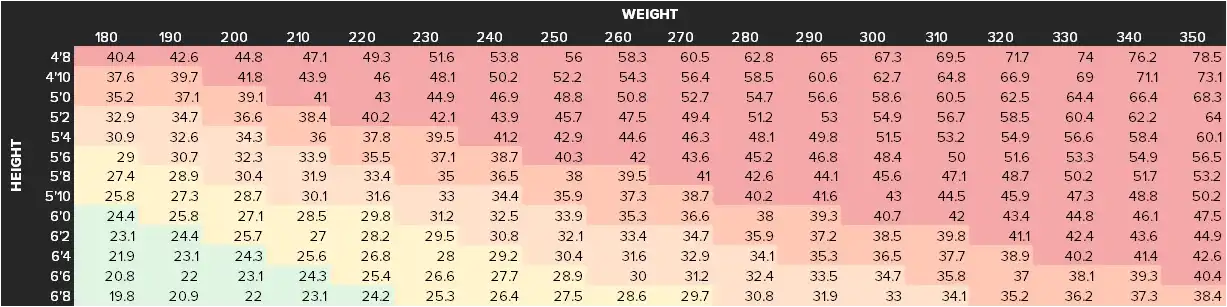
BMI Chart for Adults
The BMI chart below shows how height and weight correspond to Body Mass Index values.
When Diets and Injections Are Not Enough
Many patients who visit our center have tried multiple weight loss methods, including:
- Diet programs
- Exercise plans
- Prescription weight-loss medications
- Weight-loss injections
While some individuals see temporary results, long-term weight loss can be difficult to maintain. For patients with severe obesity, bariatric surgery remains one of the most effective long-term treatments available.
Bariatric Surgery Options at BASS
Our experienced bariatric surgery team offers several procedures designed to help patients achieve sustainable weight loss:
- Gastric Sleeve
- Gastric Bypass
- Duodenal Switch
- Adjustable Gastric Band
These procedures can lead to significant improvements in conditions such as:
- Type 2 diabetes
- High blood pressure
- Sleep apnea
- Joint pain
- Fatty liver disease
Many patients experience improved mobility, energy levels, and overall quality of life.
Start Your Weight Loss Journey
If your BMI and overall health suggest that bariatric surgery may be an option, a consultation can provide a more complete evaluation. Our team will review your medical history, discuss treatment options, and help determine an appropriate path forward. Request a bariatric consultation with our specialists in Walnut Creek or Brentwood.
Frequently Asked Questions About BMI
What is a healthy BMI range for adults?
For most adults age 20 and older, a BMI between 18.5 and 24.9 falls within the healthy weight range. A BMI below 18.5 is considered underweight, 25 to 29.9 is considered overweight, and 30 or higher falls within an obesity category.
What BMI qualifies for bariatric surgery?
Current guidelines recommend bariatric surgery for adults with a BMI of 35 or higher, regardless of whether obesity-related health conditions are present. Surgery is also recommended for adults with type 2 diabetes and a BMI of 30 or higher. For some adults with a BMI between 30 and 34.9, surgery may be considered when nonsurgical treatment has not produced substantial or lasting weight loss or improvement in obesity-related health conditions.
Is BMI accurate for everyone?
BMI is a screening measure and does not directly measure body fat or overall health. Factors such as muscle mass, body composition, age, and fat distribution can affect how a BMI result should be interpreted. Healthcare providers may use BMI along with other health measurements.
Is this BMI calculator for children and teens?
No. This calculator uses adult BMI categories and is intended for adults age 20 and older. BMI for children and teens is interpreted differently using age- and sex-specific growth charts.